04
04
/
/
07
07
ENERGY & ENTERPRISE SOFTWARE
·
·
2023
2023
Coming Soon!
coming-soon
Textbook to Screen
textbook-to-screen
Battery Shopping Experience
battery-shopping-experience
Consumer Battery Choices
consumer-battery-choices
Olympic Escape Room
olympic-escape-room
Duolingo Meets Netflix
duolingo-meets-netflix
A Siri That Understands Everyone
a-siri-that-understands-everyone
consumer-battery-choices
Consumer Battery Choices
Turning Optima usability research into a shared product strategy, prioritized design opportunities, and a roadmap for Enel X’s next iteration.
UX Research
UX Research
Product Strategy
Product Strategy
Workshop Facilitation
CLIENT
CLIENT
Enel X
Enel X
MY ROLE
MY ROLE
UX Designer & Researcher
TIMELINE
TIMELINE
3 months
3 months
·
·
Feb - Apr 2023
Feb - Apr 2023
#6F2C91

Overview
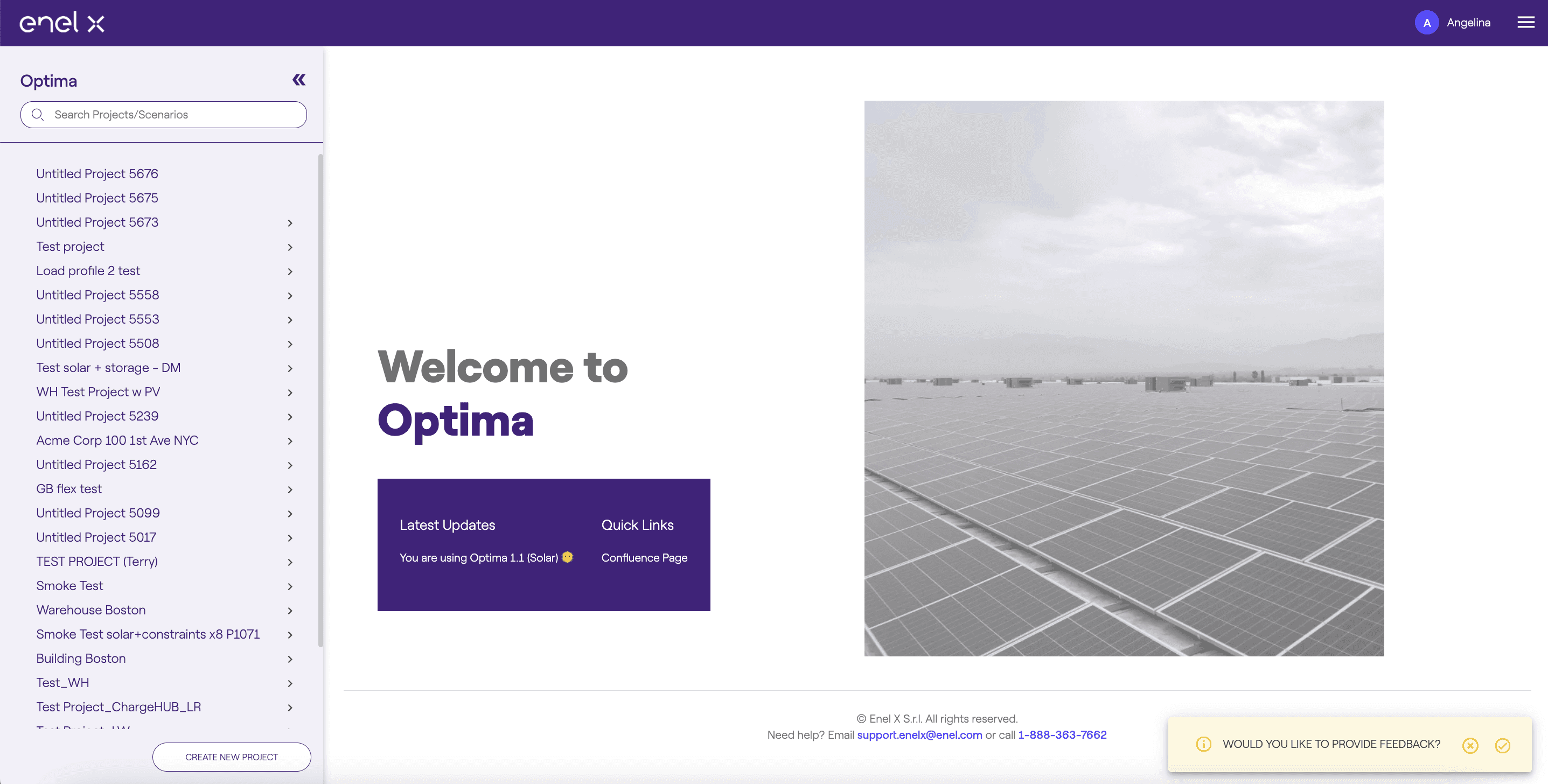
Enel X’s Optima application enables users to view analytics for their installed solar energy batteries. Following its February pre-production release, the team needed a clearer understanding of how people used the product and where the next iteration could make the greatest difference.
I scoped the research approach and facilitated strategic workshops to connect user needs with design, engineering, and product perspectives. The work translated usability evidence into shared priorities and a phased roadmap.
overview
The Challenge
The team lacked a holistic view of current user behavior. Limited visibility into workflows, stakeholder misalignment, and an unclear product direction made it difficult to agree on what to improve next.
The design question
How might we better understand users’ workflows and challenges to identify meaningful opportunities for improving Optima? Our goal was to create a shared understanding of user needs and product opportunities before committing to the next design iteration.
the-challenge
My Role
My role spanned UX research, design sprint architecture, product strategy, and design scoping over a three-month engagement with Enel X. I brought users, designers, developers, and product stakeholders into a shared decision-making process.
01 / Scope the research
Defined an approach centered on task-based usability testing to understand real workflows, friction, trust, and decision-making.
02 / Make observations actionable
Synthesized behavioral patterns, clustered pain points, and translated findings into summary insight cards and design opportunities.
03 / Facilitate prioritization
Used effort–impact matrices and independent feasibility and desirability scoring to evaluate opportunities across design, product, and engineering perspectives.
04 / Align the next phase
Helped shape a phased roadmap that made immediate priorities and longer-term user needs visible to the wider team.
my-role
Research
Moderated task-based usability testing
We tested with five Optima users: three internal solution engineers and two external customers, with varied experience levels and job functions. The Product Manager, Engineering team, and Design team were stakeholders in the study.
Participants completed realistic workflows using provided files while thinking aloud. Sessions combined pre-interview questions, task observation, and follow-up discussion to understand not only whether tasks were completed, but where people hesitated or needed reassurance.
Track behavior with a rainbow sheet
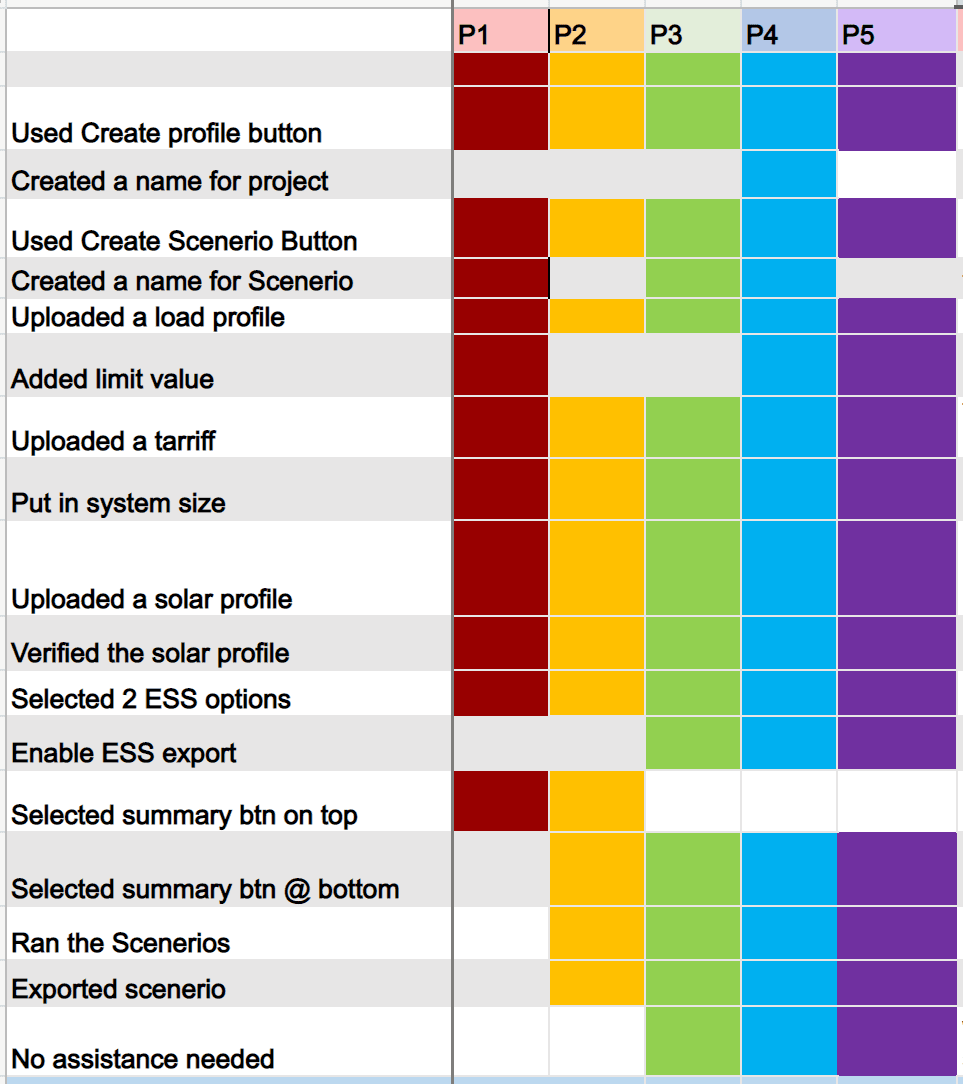
Each participant was assigned a color and a label from P1 to P5. We recorded their behavior step by step in a shared spreadsheet, making recurring friction and differences in task success easier to compare.
Synthesize patterns into insights
We tagged observations into themes, clustered pain points, and generated summary insight cards. Scanning across participants helped distinguish recurring issues from individual observations.

Three recurring issues
Workflow bottlenecks affected task completion. Navigation and information architecture issues appeared across participants. Terminology conflicted with users’ mental models, reducing confidence as they moved through the product.
research
Design Process
Compare effort and impact across teams
I created matrix maps to translate research findings into possible next steps. Working with the Product Manager, Project Lead, and Developer Lead, we evaluated user pain points, implementation effort, and potential impact.
We compared the UX team’s placements with the product team’s independent assessment, then layered the maps to reveal agreement and disagreement. Opportunities both teams considered high-impact and low-effort became first-phase priorities. Different assessments became discussion points rather than settled decisions.

Resolve close calls with independent scoring
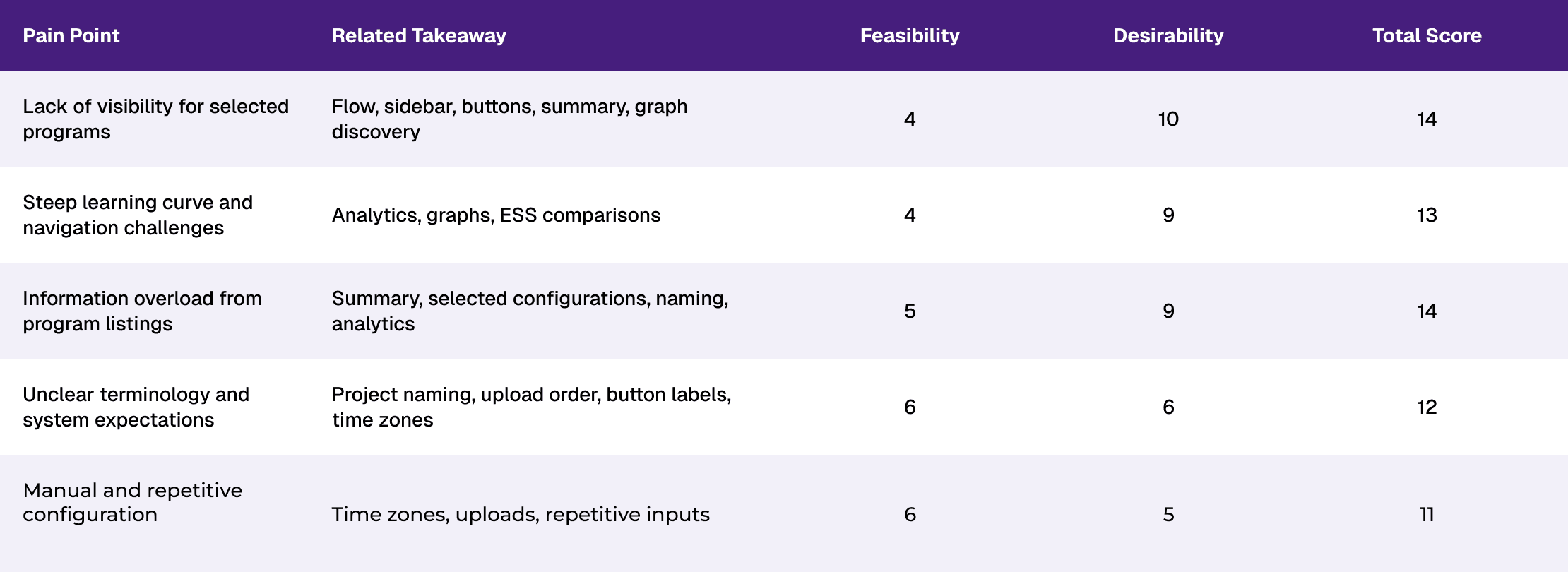
The Product Manager and Design team scored each takeaway for feasibility and desirability before comparing results. Independent scoring helped avoid anchoring on another person’s judgment, while combined scores provided a basis for ranking closely matched opportunities.
Defer deliberately rather than discard
High-scoring opportunities moved into the next design iteration. Lower-scoring but valid user needs were retained on a longer-term North Star roadmap rather than dropped. This preserved the distinction between what mattered and what could be addressed immediately.
Connect user needs with technical realities
Cross-functional workshops brought managers, developers, and analysts into the process. Evaluating desirability alongside feasibility created a shared basis for discussing trade-offs and aligning the next phase of work.
design-process
The Solution
A research-backed product roadmap
The main deliverable was a shared direction for Optima’s next iteration. We synthesized the findings into actionable initiatives, evaluated impact, effort, and business value, and sequenced work into a phased roadmap.
Working with the Lead UX Designer, Product Manager, Engineering team, and business stakeholder, we organized initiatives into Must Haves, Quick Wins, and Filler Work. The roadmap made short-, medium-, and long-term work visible in one place.

A bridge from research to design
The research synthesis, prioritization maps, scorecard, and roadmap gave the team a common reference for what to build next. Immediate improvements were grounded in observed user needs, while deferred opportunities remained available for future planning.
the-solution
Impact & Results
A shared product direction
The work established a prioritized roadmap that aligned Design, Product, and Engineering around the next iteration and created a single source of truth for future planning.
Actionable design priorities
Usability findings identified workflow bottlenecks, navigation and information architecture issues, and terminology mismatches. The prioritization process turned these findings into a focused set of opportunities for the design team.
Visible trade-offs and future needs
Comparing effort–impact assessments surfaced misalignment before it became a roadmap conflict. Independent scoring clarified close decisions, and the North Star roadmap preserved valid needs that could not be addressed immediately.
The documented outcomes are research findings, stakeholder alignment, and a prioritized plan. This case study does not report quantified post-launch usability or business improvements.
impact-results
Reflection
Look for hesitation, not only completion
Some of the most useful evidence came from participants pausing, searching, or seeking reassurance even when they eventually completed a task. Observing behavior revealed usability issues that participants could not always articulate in feedback alone.
Shared understanding comes before shared solutions
Bringing user evidence into cross-functional workshops helped the team agree on the problems before evaluating possible solutions. Feasibility and desirability gave us a common language for discussing the next phase.
Prioritization is an alignment practice
Teams could agree that an issue mattered yet disagree on its urgency. Making those judgments visible through a shared framework helped build consensus and clarified what came next. Leading the synthesis strengthened my ability to connect qualitative research with strategic product decisions.
reflection