05
05
/
/
07
07
EDUCATION & MEDIA LITERACY
·
·
2022
2022
Coming Soon!
coming-soon
Textbook to Screen
textbook-to-screen
Battery Shopping Experience
battery-shopping-experience
Consumer Battery Choices
consumer-battery-choices
Olympic Escape Room
olympic-escape-room
Duolingo Meets Netflix
duolingo-meets-netflix
A Siri That Understands Everyone
a-siri-that-understands-everyone
olympic-escape-room
Olympic Escape Room
Olympic Escape Room
Designing an online escape room that helps students practice identifying misinformation through a timed Olympic mystery.
Game Design
Game Design
Educational Technology
CLIENT
CLIENT
Center of Informed Public, Loki’s Loop
MY ROLE
MY ROLE
UX Designer
UX Designer
TIMELINE
TIMELINE
Jan - Jun 2022
Jan - Jun 2022
·
·
6 Months
6 Months
#347C9D

Overview
The Olympic Escape Room is an online escape room designed in partnership with the Center of Informed Public as an additional game for the Loki’s Loop Project. It helps students practice identifying misinformation in an engaging, facilitated experience.
Like a physical escape room, the game can be played individually or in a group, has a game host, and uses a time limit. Players solve an Olympic-themed mystery while encountering conflicting headlines, fabricated identities, and suspicious voicemails.
overview
The Challenge
Making verification skills engaging and actionable
How might high-school and college students become critical information consumers so they can identify misinformation with greater confidence?
The team chose the Olympics as a familiar, engaging context with opportunities to examine contested information. The challenge was to translate information-literacy goals into activities students would actively participate in, rather than only explain misinformation in the abstract.
Interviewees described cross-checking articles and videos as time-consuming and found it difficult to judge the legitimacy of some sources. The experience needed to make these judgments tangible within a game.
the-challenge
My Role
UX design within a four-person team
My documented role was UX Designer. I collaborated with Justin Bao, Katherine Wardhana, and Molly Wu on a six-month project combining research, narrative development, and an online escape-room experience.
The case study documents team activities including market research, a survey, user interviews, personas, affinity mapping, puzzle development, and high-fidelity mockups. These are presented as collaborative work; the source does not separate individual ownership for every artifact.
my-role
Research
Research questions
What misinformation topics appear around the Olympics?
What existing tools help people detect misinformation?
Which channels do people use to consume information?
Why do attention-grabbing headlines attract readers, even when they contain misinformation?
Market research
We examined existing tools to understand approaches to tracking and verifying information. TwitterTrails analyzes how stories spread and how skeptical users are of their validity. Who Targets Me? explains political-ad targeting using anonymous profiles and collected ad information. ClaimBuster uses automated methods to identify potentially factual or false claims.
Survey: 20 responses
Of the 20 respondents, 95% were between ages 18 and 24, and 30% were unaware of misinformation surrounding the Olympics. Most respondents watched the Olympics and had a general understanding of the games. Cross-checking multiple sources was the most popular way to validate information.
Survey questions explored where participants found Olympic news, how often they checked its legitimacy, and what they did after spotting misinformation. The age distribution should be considered when interpreting the findings for a wider high-school audience.
Six user interviews
We interviewed six high-school or college students about their preferred information sources, how they evaluated unfamiliar information, and their Olympic-news habits. A recurring pain point was that cross-checking sources took time and source credibility could remain difficult to assess.
Personas and synthesis
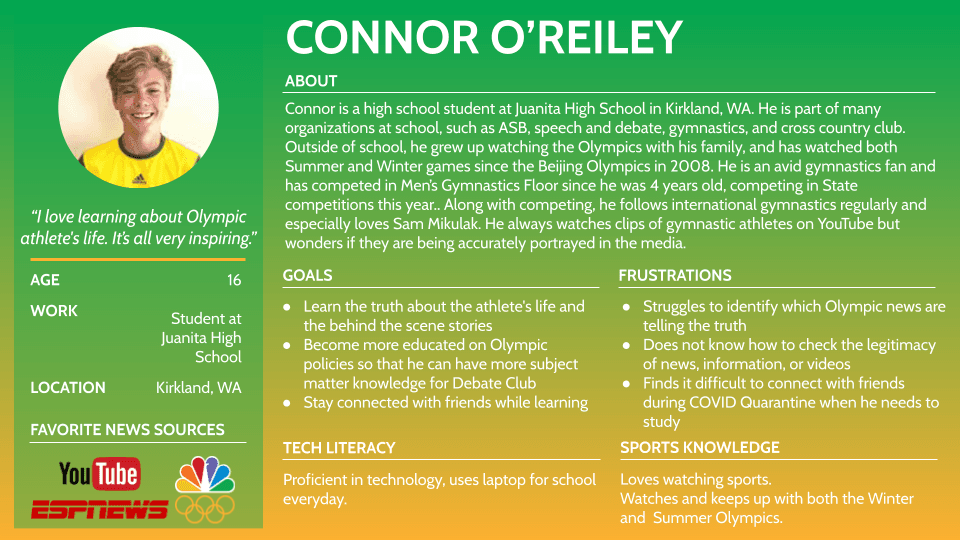
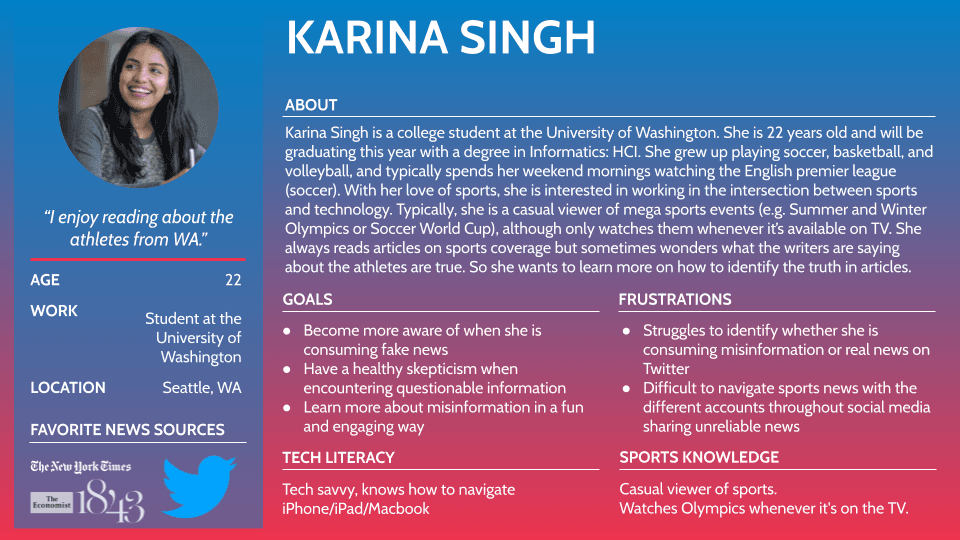
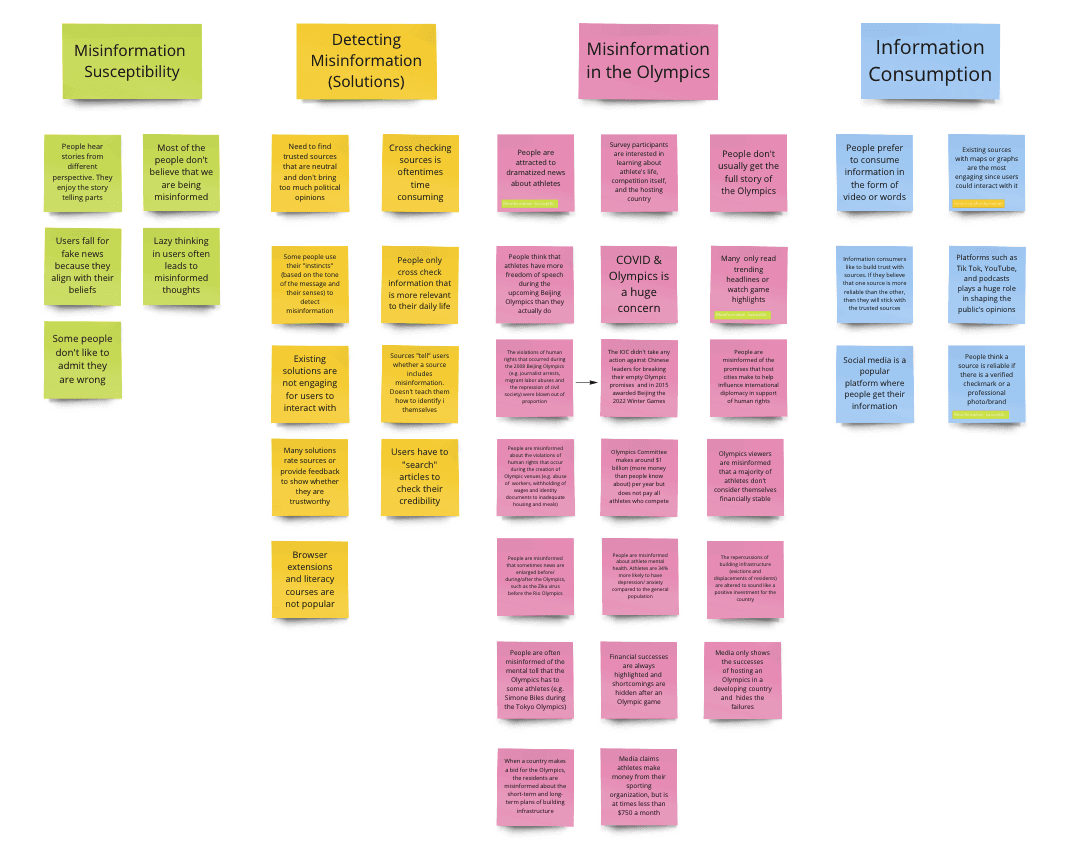
Personas captured goals, frustrations, technology literacy, sports knowledge, and preferred news sources. An affinity diagram organized observations into recurring issues and relationships between misinformation and information consumption.
Key insights
People are attracted to interesting and exciting information, while accurate information can sometimes create uncomfortable feelings.
Participants preferred anonymous profiles when discussing controversial subjects such as politics.
Verification is effortful: students described checking articles and videos as time-consuming.
research
Design Process
Translating research into a playable narrative
The team organized the learning experience around an Olympic mystery rather than disconnected fact-checking exercises. This gave players a shared goal and a reason to inspect competing pieces of information.
The mission: clear an athlete’s name in 45 minutes
In the fictional 2050 Winter Olympics, hosted by La’Ann, Molina Bardhana wins gold after a rival, Justine Kristoff of Russio, falls in the final. Rumors claim Molina poisoned her competitor. Molina and her coach must uncover the truth before a committee meets in 45 minutes to decide whether to take away her medal.
Three complementary verification activities
The experience pairs headline interpretation with scrutiny of fabricated faces and suspicious voicemails. Each puzzle exposes a different form of questionable evidence while maintaining the same narrative stakes.
Headlines: work through contradictory statements and examine how negative framing and confirmation bias shape interpretation.
Faces: question whether realistic-looking profile images establish a trustworthy identity.
Voicemails: evaluate phrasing, delivery, and caller requests rather than accepting an authoritative-sounding message at face value.
These are documented design intentions, not evidence that the game improved misinformation-detection performance.
design-process
The Solution
A facilitated online escape room
Players work individually or collaboratively, supported by a game host, to solve the mystery within a limited time. The high-fidelity experience uses three puzzle types to make information evaluation part of gameplay.
01 — Headlines
Task: match statements with the correct headlines. The puzzle recreates an information environment containing contradictory positive and negative claims about Molina. It introduces basic information literacy, confusion, and confirmation bias, including how negative statements can be especially memorable.

02 — Faces
Task: identify fake images of people writing articles and posting on Twitter, Instagram, Reddit, and Facebook. The puzzle demonstrates the difficulty of distinguishing realistic fabricated identities and explores vulnerability and the third-person effect.


03 — Voicemails
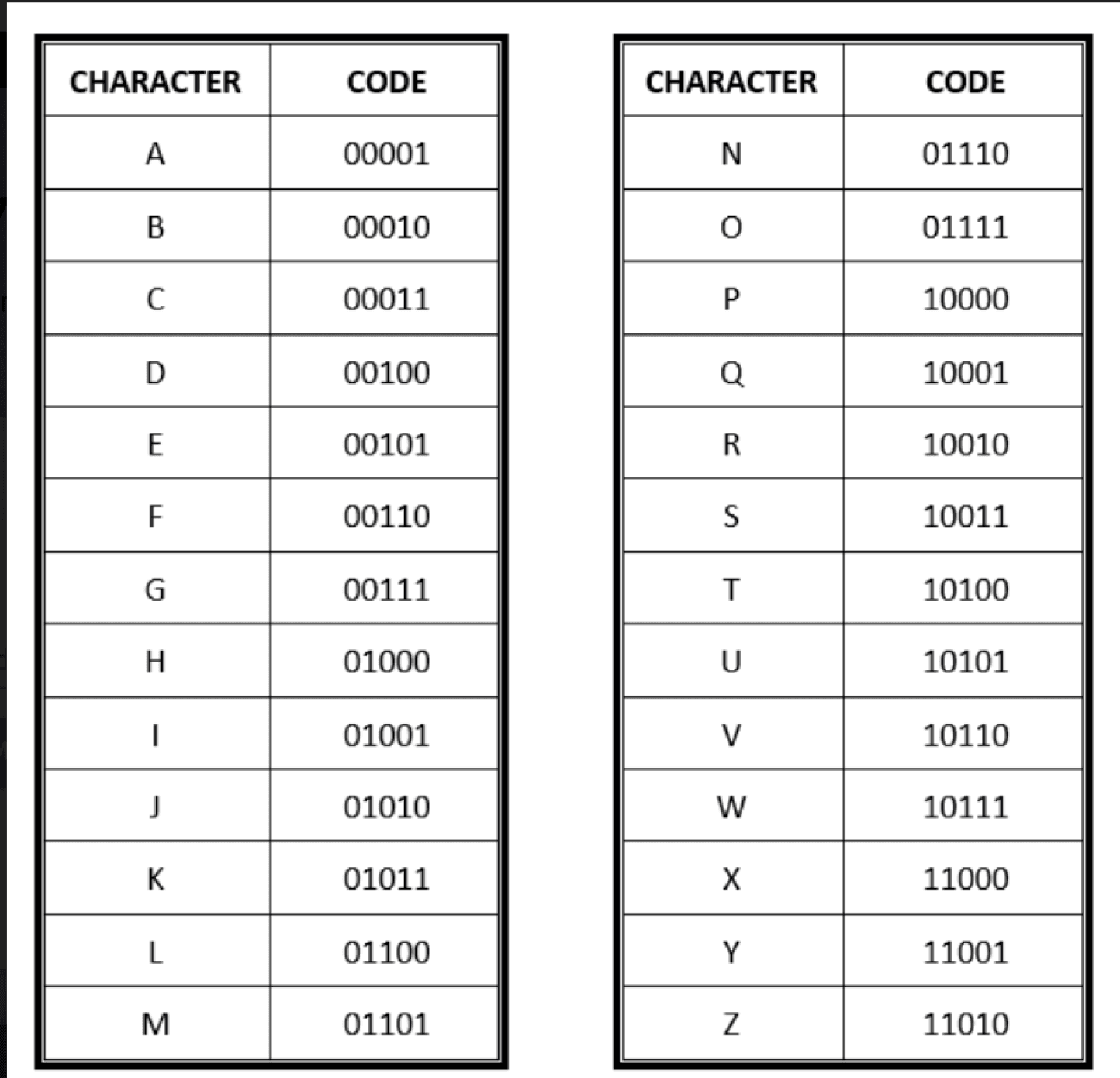
Task: distinguish real and fake callers claiming to represent the fictional Olympic governing organization. Players assess word choice, phrasing, manner of speaking, requests, and other credibility cues.


Explore the game
Password provided in the source case study: Gold.
the-solution
Impact & Results
Documented outcomes
A research-informed online escape-room experience for the Loki’s Loop Project.
20 survey responses and six interviews informing the understanding of misinformation habits.
Three puzzle types addressing headlines, fabricated identities, and suspicious audio messages.
High-fidelity mockups, a linked game experience, and a University of Washington capstone listing.
Evidence boundary
The source does not report completion rates, usability-test results, changes in misinformation-detection accuracy, or measured learning gains. Helping students become more confident information consumers was the project goal, not a quantified outcome documented in the case study.
impact-results
Reflection
Designing for critical judgment, not just puzzle completion
The case study connects an engaging narrative with concrete acts of verification. Its central design tension is that an exciting mystery can motivate participation, but engagement alone does not establish that students can apply the same skills outside the game.
Research limitations and future validation
The survey was small and concentrated among respondents aged 18–24. Future validation could include a broader high-school sample, observation of where players need host support, and a comparison of credibility judgments before and after play. These are proposed next steps, not activities or results claimed by the source.
reflection